An article about how we as a society react (or rather, don't react) to the epidemic of automobile deaths, and how the solutions we do offer tend to be ineffective. It's fascinating to me that we as a species let ongoing disasters like this (over 30,000 people every year) go on with barely any notice, while a train or plane crash is cause for round-the-clock coverage, huge investigations, regulatory and design overhauls, and people freaking out and cancelling reservations out of fear for their lives. And yet almost nobody thinks twice about getting into a car. You can look at it in other ways (like two 747s falling out of the sky every week, or a 9/11 happening every month) but the point is the same.

Is it cognitive dissonance, preventing us from recognizing that in order to properly deal with the problem we will have to radically change our way of life at great expense? That what we take for granted as a wondrous modern convenience is also a game of russian roulette? (You can add cell phones and other driving distractions to this analogy if it pleases you.)

With so little media coverage of car accidents, is it just a matter of "out of sight, out of mind"?

Do we feel safer because we are in control of the vehicle when driving?

Is it because they are so commonly called "accidents", suggesting that there is no specific cause or remedy? Why did we start saying accident, anyway? People used to refer to them just a little differently:
/cdn0.vox-cdn.com/uploads/chorus_asset/file/2934014/518a6cedb3fc4bb6e600001c_the-moscow-affair_grim_reaper-1000x493.0.jpg)
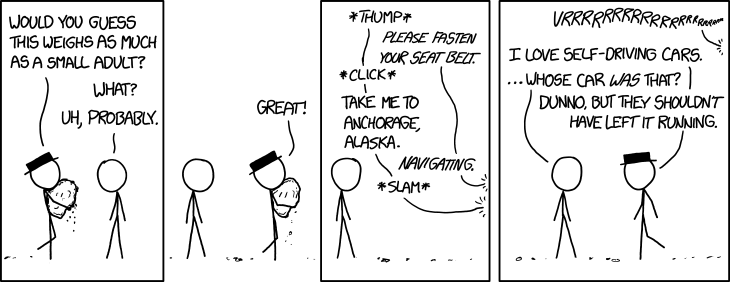
Or should we just let it continue until self-driving cars fix everything?
My guess is we'll let this disaster continue as long as it happens quietly.


The death rates for motor vehicle fatalities are alarming. I think a huge part of the problem is that there really is no alternative in many places. I see this post, realize our inconsistent reactions to deaths, get passionate, and think, "Well, I could ride my bike everywhere in town though that would take a very long time and my perceived chances of death are much higher as a cyclist, so I'll keep driving my car". And I do think that the perception that we have control over vehicle makes the situation less dire in a strange way. Meaning, as passengers in a plane, we have absolutely no control of the situation and are the definition of sitting ducks, whereas we have the choice not to drink and drive, we think that if we are good enough defensive drivers that we can protect ourselves and our loved ones. Yet, many citizens don't stop to think of the built environment that we drive in. We have blind faith in the engineers that design the roads, and as engineers there is trust in the methods we learn in school. Most citizens don't see question intersections as dense points of conflict or consider roundabouts as safer alternatives.
ReplyDeleteAll this to say, maybe we will have to wait until self driving cars take the wheel, and then we'll face a new set of unexpected problems.